

We have seen many teams with smart people and weak shared judgment. This happens more often than most leaders admit. People speak, but they do not really think together. Meetings happen, yet clarity does not grow. Decisions get made, but learning does not stay.
Organizational collective wisdom is the group’s capacity to see clearly, decide with maturity, and act with shared responsibility.
That kind of wisdom does not appear by chance. It needs structure. Not heavy structure, but simple frameworks that help people slow down, name what is true, and listen beyond habit. In our experience, the best frameworks are easy to repeat. They do not make teams rigid. They make teams more awake.
We once worked with a group that had talent, goodwill, and speed. Still, every project created tension. Why? Because the team confused agreement with understanding. Once they started using a few simple practices, the tone changed. Not overnight. But clearly. People interrupted less. Defensive reactions softened. The group began to think with more depth.
Wisdom grows when reactions slow down.
Why teams lose wisdom
Most teams do not fail from lack of information. They fail from emotional noise, hidden loyalties, rushed interpretation, and unclear values. A team may have data, plans, and skill, but still repeat poor choices.
We think collective wisdom gets blocked by a few common patterns:
- People speak from role, not from real perception.
- Conflict stays hidden until it leaks into behavior.
- The loudest voice shapes direction too early.
- Urgency replaces reflection.
- No one stops to ask what the team is not seeing.
These patterns are human. They do not mean a team is broken. They mean the team needs containers for better thought. We can support this by bringing simple frameworks into ordinary routines.
The pause, sense, choose framework
This is one of the simplest models we use. It works well in meetings, conflict moments, and decision points. The sequence matters because it keeps teams from jumping straight into opinion.
- Pause
- Sense
- Choose
In the pause stage, we stop the rush. This can be one minute of silence, one written question, or a brief round where each person says what they notice. The point is not silence for its own sake. It is to reduce automatic reactions.
In the sense stage, we gather what is present. Facts. Emotional tone. Risks. Assumptions. Missing voices. We ask, “What are we seeing?” and “What are we avoiding?” This is where teams often discover that the surface issue is not the full issue.
Then comes choose. Only after the group has slowed down and sensed the full picture do we decide. Better decisions often come from better sequencing, not more debate.
If a team wants a deeper view of patterns that shape group perception, it can learn from themes related to conscious awareness in organizations.

The three-layer check
Teams often talk only at the task level. That is too shallow for hard decisions. We use a three-layer check to widen the view without making things complex.
The three layers are:
- What is happening in the task?
- What is happening in relationships?
- What is happening in meaning?
The first layer covers goals, deadlines, resources, and choices. The second looks at trust, tension, silence, and alliances. The third asks why this matters, what values are involved, and what kind of culture is being shaped by the decision.
When teams skip the second and third layers, they may solve the task and still damage the group. We have seen this many times. A decision looks clean on paper, but leaves confusion in the room.
Wise teams do not separate results from relationships and meaning.
This is also where practical reflection helps. Broader thought on values, judgment, and aligned action can be found in discussions around practical philosophy for daily decisions.
The rotating perspective circle
One reason teams get stuck is simple. Everyone looks from the same angle. The rotating perspective circle is a short group exercise that helps people consider a question from different positions.
For one key issue, we ask the group to respond in four rounds:
- What does this look like from the client or user side?
- What does this look like from the team’s internal side?
- What does this look like from the long-term side?
- What does this look like from the ethical side?
Each round gets one or two minutes. No debate at first. Just contribution. This keeps the group from collapsing too quickly into one frame. It also reduces ego attachment, because people are serving perspectives, not defending identity.
When teams begin to think systemically, hidden influences become easier to name. We have found this especially helpful in organizations with recurring tension, role confusion, or inherited patterns. For those themes, ideas connected to systemic constellation work can broaden perception.
What we do not name, we repeat.
The value-impact review
Many groups review outcomes only through numbers or delivery. That matters, of course. But collective wisdom grows when teams also ask what impact their way of working is creating in people, trust, and long-term value.
The value-impact review can be used at the end of a project or month. We ask five questions:
- What did we deliver?
- How did we deliver it?
- What did this create in people and relationships?
- What value did it generate beyond short-term gain?
- What do we want to carry forward or correct?
This framework gives the team a fuller mirror. It helps people connect action with consequence. Over time, this builds maturity, not just output.
We believe organizations become wiser when they expand their idea of value. Reflections on this wider lens can be deepened through themes related to human valuation in organizational life.
How to make frameworks stick
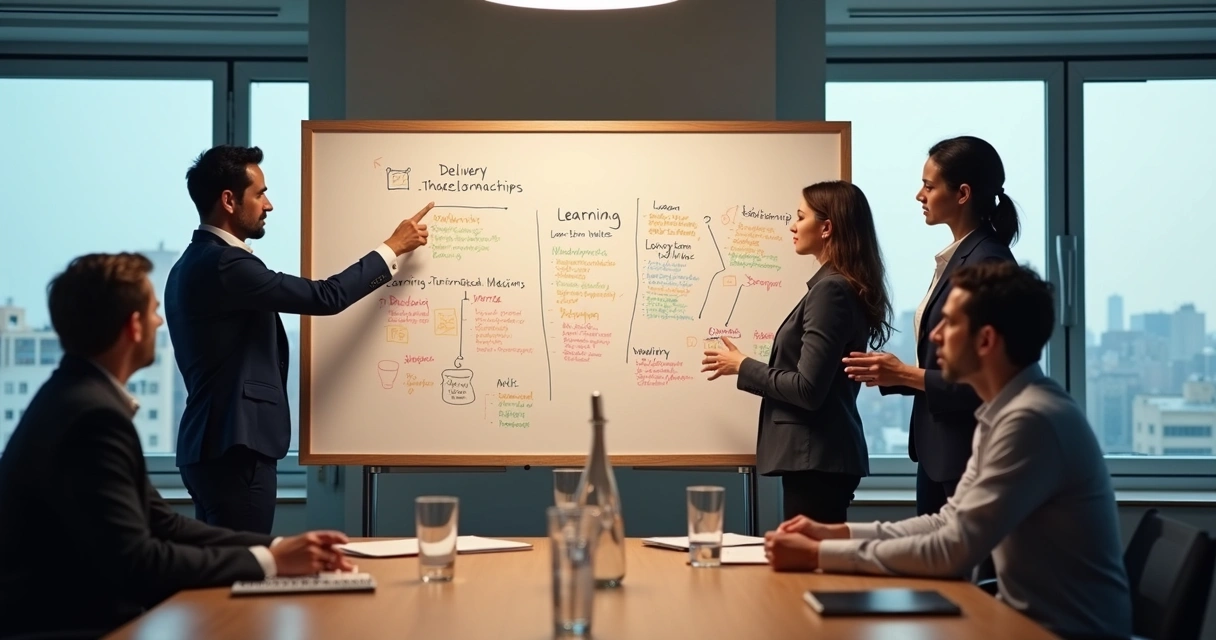
Even simple models fail when they stay theoretical. We have learned that teams absorb frameworks when they are brief, repeated, and tied to real work. Not as decoration. As practice.
A few habits help:
- Use one framework for a full month before adding another.
- Start meetings with the same reflection question.
- Assign someone to watch for group patterns, not only agenda time.
- End decisions by naming trade-offs and possible blind spots.
- Review not only what was done, but what was learned about the team.
We also suggest that leaders model humility. If leaders cannot say, “We may be missing something,” the team usually cannot either. Collective wisdom needs psychological permission. It grows when people feel safe enough to tell the truth, and responsible enough to do it well.
For readers who want to follow ongoing reflections from our editorial perspective, we also share broader insights through the work of the team behind these articles.
Conclusion
Simple frameworks can deepen organizational collective wisdom because they give shape to better attention. They help teams pause, widen perception, include relationship truth, and link choices to values. None of this needs to be complicated. In fact, simple structures often work best because people can remember them under pressure.
Collective wisdom is not the sum of opinions. It is the quality of shared consciousness in action.
When teams practice that quality on purpose, meetings change. Decisions become cleaner. Responsibility becomes more real. And something subtle but strong begins to form. A group mind with more maturity.
Frequently asked questions
What is organizational collective wisdom?
Organizational collective wisdom is a team’s shared ability to understand reality clearly, hold different views without collapse, and make sound choices with awareness of consequences. It includes facts, emotional maturity, ethics, timing, and shared learning.
How to build collective wisdom at work?
We build collective wisdom at work by creating repeatable habits that slow reactions and improve reflection. Teams can use structured pauses, clear decision rounds, honest review spaces, and shared language for values, assumptions, and impact. Consistency matters more than complexity.
What are simple frameworks for teams?
Simple frameworks for teams include models such as pause, sense, choose, the three-layer check, rotating perspective circles, and value-impact reviews. These help groups think beyond urgency, include more than one angle, and connect action with relationship and meaning.
Why is collective wisdom important?
Collective wisdom matters because groups make better choices when they can see more than one layer of reality. It reduces blind spots, lowers repeated conflict, strengthens trust, and supports decisions that people can stand behind with more integrity and clarity.
How can we measure collective wisdom?
We can measure collective wisdom by looking at decision quality over time, the team’s ability to discuss hard issues openly, the presence of shared learning after mistakes, and the level of alignment between stated values and real behavior. It is seen in patterns, not in one single metric.